by BHKRCORVETTE | Apr 1, 2026 | Uncategorized
The assistive communication technology market is growing fast. The global AAC devices market was valued at $2.09 billion in 2024 and is projected to grow to $3.56 billion by 2029, driven by an aging population, increased smartphone adoption, and rising awareness of...
by BHKRCORVETTE | Apr 1, 2026 | Uncategorized
When we talk about speech impairment, we tend to focus on the physical — the mechanics of voice, the technology of communication. What gets talked about less is the emotional and social toll. In a survey of 188 people with Parkinson’s disease, 92.5% reported at...
by BHKRCORVETTE | Apr 1, 2026 | Uncategorized
For people living with ALS, communication is a race against time. As the disease progresses, speech becomes harder, then impossible. The window for capturing a person’s natural voice — their cadence, their personality, their sound — closes fast. As speech...

by BHKRCORVETTE | Apr 1, 2026 | Uncategorized
Most people know Parkinson’s disease affects movement. Few realize how devastating it is to speech. Research has found that speech disorders affect up to 89% of people with Parkinson’s disease — yet despite that staggering number, only 3–4% ever receive...
by BHKRCORVETTE | Apr 1, 2026 | Uncategorized
If you’ve ever looked into AAC apps and devices, you’ve probably noticed they all focus heavily on one thing: helping users request objects or actions. “I want water.” “I need help.” “I’m hungry.” Requesting is...
by BHKRCORVETTE | Mar 25, 2026 | Uncategorized
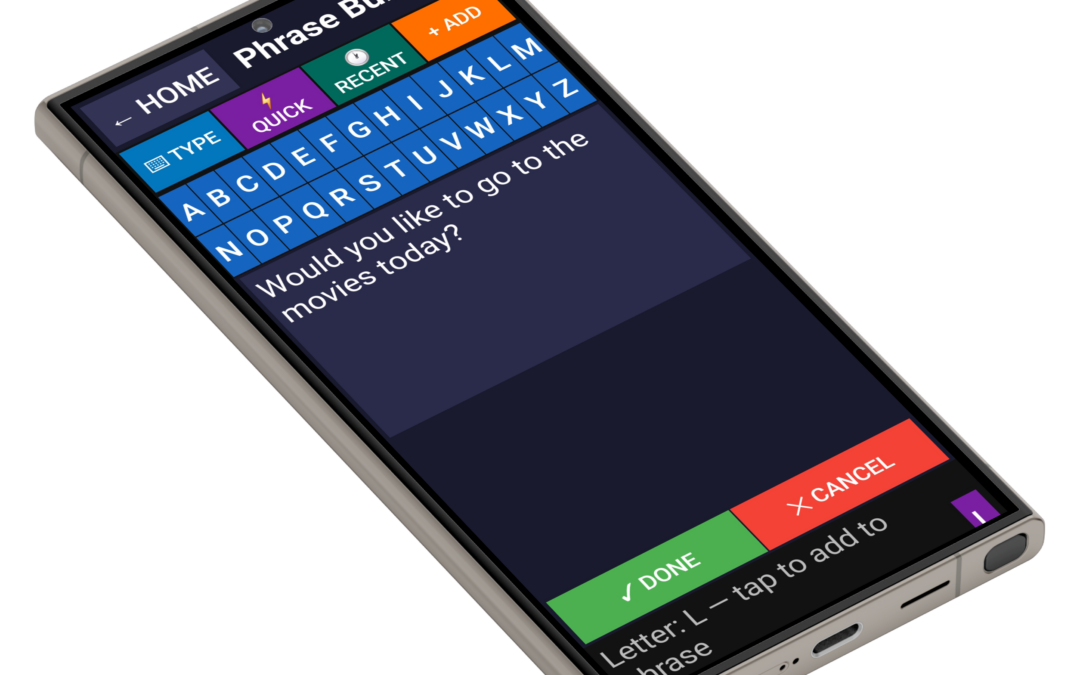
For decades, people with speech impairments who needed AAC (Augmentative and Alternative Communication) technology had limited options: expensive dedicated hardware, long insurance approval processes, and devices that could cost thousands of dollars. Dedicated AAC...